
01
Pick the curriculum + lesson
Choose which of the supported curricula you're teaching and which specific lesson. The generator's phonics caps come from the lesson — no untaught patterns can appear in the book.
Decodable book generator
Pick a curriculum. Pick a lesson. Pick the audience. Storytime AI generates a brand-new decodable book inside the scope — narrated, illustrated, and ready to read in seconds. Aligned to the exact phonics patterns your student has been taught. Nothing untaught sneaks in.
15-30 seconds end-to-end · 500 AI credits per year on Teacher Plan
How it works
01
Pick the curriculum + lesson
Choose which of the supported curricula you're teaching and which specific lesson. The generator's phonics caps come from the lesson — no untaught patterns can appear in the book.
02
Choose the audience
K-2 standard decodable, or Hi-Lo (grades 3-12 age-respectful). Same phonics constraint, different plot and tone.
03
Set the controls
Character, illustration style, story length (7 / 14 / 21 paragraphs), optional plot prompt. Optional teacher-supplied story vocabulary the model can spend sparingly.
04
Generate
15-30 seconds later: a brand-new decodable in the library with narrated audio, illustrations, honest decodability percentage, and a lesson-alignment tag. Available immediately to the student or class you generated it for.
Controls
The first two — curriculum and lesson — are required. Everything else has a sensible default. Power-user teachers customize all seven; most teachers set two or three.
Quality bars we don't relax
Every generated book has to clear five bars. We don't relax any of them to flatter the catalog or accommodate a harder-to-write plot.
Phonics pattern caps
The lesson's accumulated phonics inventory is hard-capped. The model cannot reach for an untaught pattern just because the plot would be better.
Decodability percentage
Every generated book is scored against the student's phonics inventory. The number shown is honest — not relaxed because the book is older-themed or harder to write.
Heart-word constraint
Only heart words the student has been taught can appear. Untaught high-frequency irregulars are blocked at generation.
Narration generated alongside
Every book comes with fluent modeled narration — same voice as the student's other books unless overridden.
Illustrations support but don't enable guessing
Images are story-supporting, not picture-cued. They don't telegraph the next word so kids practice decoding, not predicting.
See what's possible
Fourteen students. Fourteen art styles — the exact set teachers pick from in the app. Every classroom has different kids, and every kid deserves to see themselves in the book they're reading. The generator hands teachers the controls; the AI does the rendering.

Sofia · age 5
Pop Art

Maya · age 9
CGI

Diego · age 7
Watercolor Dream

Ethan · age 6
Vintage Storybook
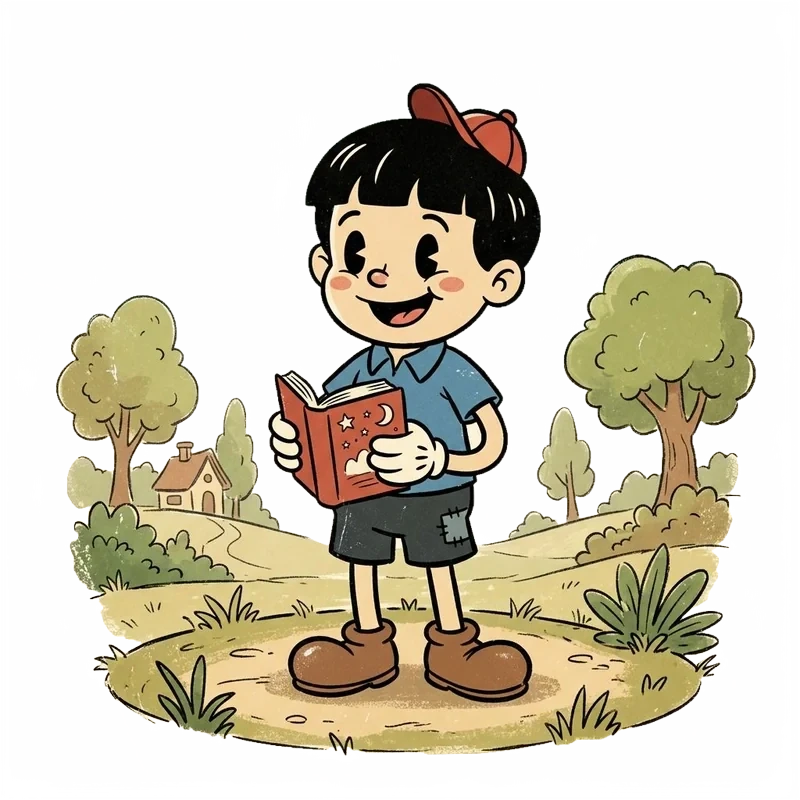
Mateo · age 4
Retro Cartoon

Anika · age 4
Dreamy Pastel

Noah · age 4
Bold Graphic

Kai · age 8
Japanese Woodblock

Fatima · age 10
Photo Realistic

Liam · age 5
Anime
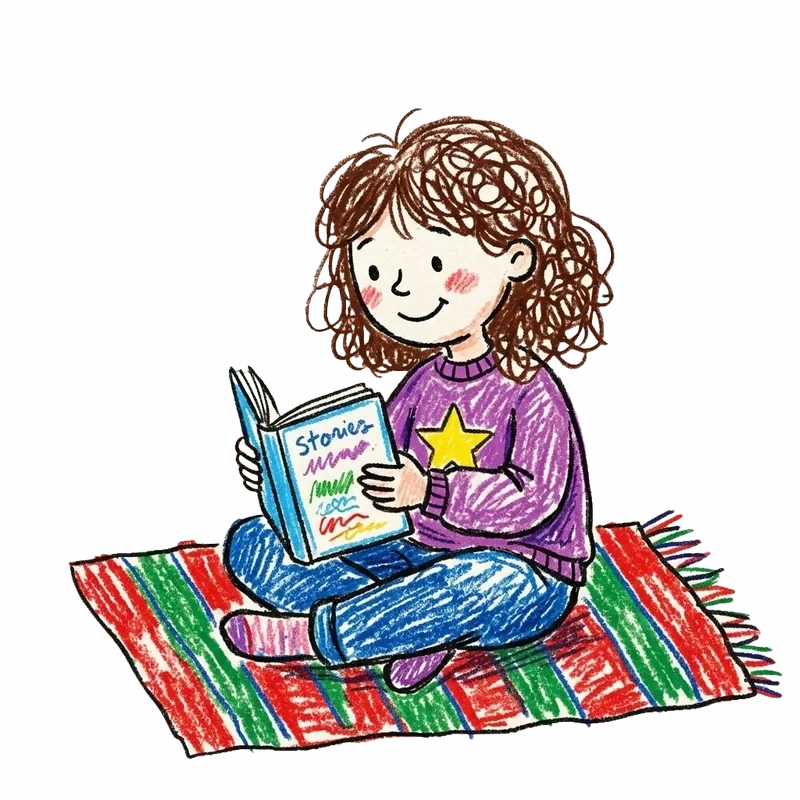
Yuki · age 11
Crayon Drawing
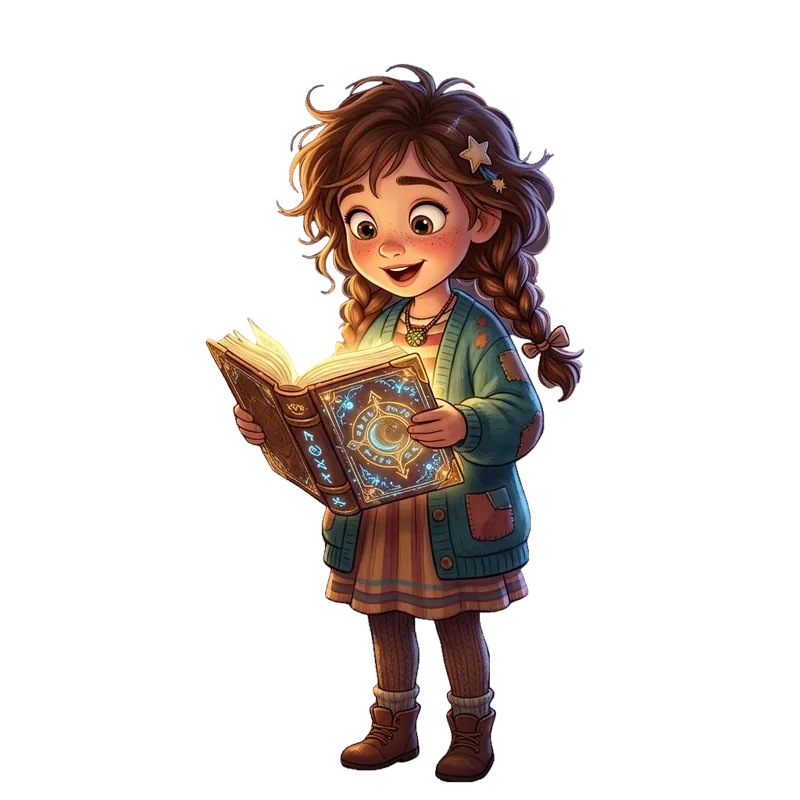
Priya · age 8
Animated Movie

Aaliyah · age 8
Comic Book

Tariq · age 6
Coloring Book
The same character can be rendered in any of these styles. Teachers set the default per student; students never have to look at art that doesn't feel like them.
When teachers use the generator
Small group
Generate three more on the spot — different plots, different characters, same /sh/ density. The group rotates through five books over five days without you having to scavenge from external sites.
Time-to-book: ~90 seconds
Reluctant reader / engagement
Generate the lesson's decodable starring a character your student picks: their name, their interests, an illustration style they chose. Representative "mirror" books are why classrooms that add them see student reading time rise by about 4 hours per week (First Book, Diverse Books Impact Study). Same phonics scope — a far more willing reader.
Time-to-book: ~30 seconds
Hi-Lo / striving older reader
Generate a Hi-Lo decodable with the same phonics constraint and an age-appropriate plot. The student practices decoding without the dignity cost.
Time-to-book: ~30 seconds
Intervention loop
Generate a decodable focused on the specific prefix the student is on. Assign as a 'Special Mission' practice activity that becomes their next-session top priority.
Time-to-book: ~30 seconds
Homework
Generate a decodable for the lesson the student is on and assign it for at-home practice. An invited parent can follow along from their parent view.
Time-to-book: ~30 seconds
What it costs
Credit cost is folded into the Teacher Plan price ($29.99 first year, $59.99 renewal). No per-book surcharge. District plans get a custom credit pool sized to enrollment.
We treat generation as instructional material, not as creative writing software. The teacher's curriculum stays the source of truth. The phonics scope cannot be overridden by the model. The decodability percentage cannot be flattered. Heart-word inventory is enforced at the lesson level. Generation is lesson-gated — students cannot use the generator outside the scope of their current lesson. The teacher is always in control.
FAQ
About the authors

Brian Carlson
Co-founder & CEO
Co-founder and CEO of Storytime AI. Leads the company from Baltimore, building a literacy platform that meets every reader where they are — anchored to the Science of Reading.
LinkedIn
Scott Quinlan
Co-founder & CTO
Co-founder and CTO of Storytime AI. Owns engineering, product infrastructure, and the agentic growth pipeline — from the platform's AI generation engine to the structured-literacy content surface district leaders evaluate.
LinkedIn
Kate Dwyer
Co-founder & CMO
Co-founder and Chief Marketing Officer at Storytime AI. Translates Science-of-Reading research and product capability into language teachers, parents, and district leaders can act on. Based in the Washington DC–Baltimore area.
LinkedInPick the curriculum. Pick the lesson. Pick the audience. Have it in the library before the bell rings.